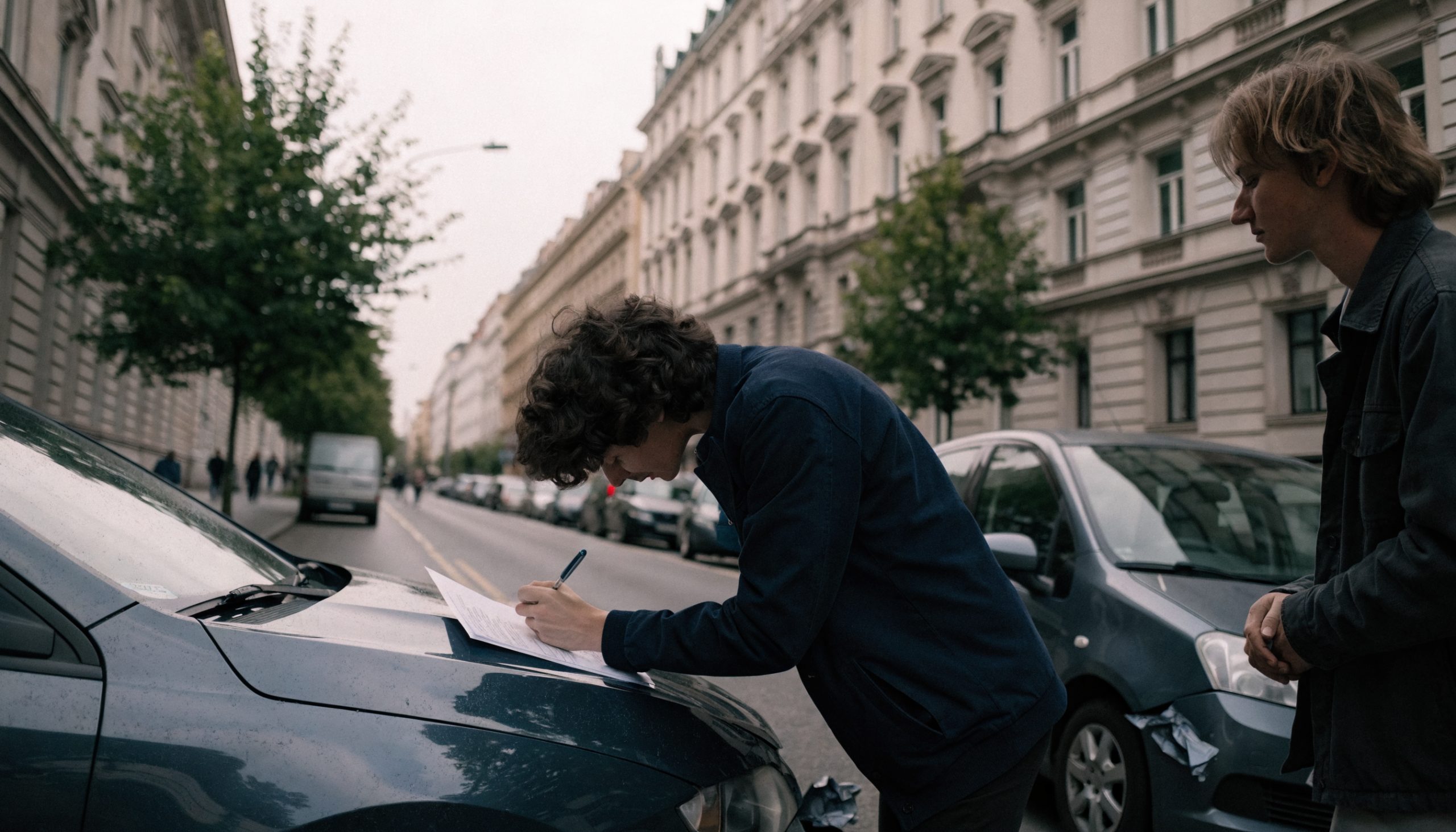
The European accident statement is a standardised form with which the parties involved document the incident themselves, in most cases without calling out the police. It is filled in at the scene, while the vehicles are still where the accident happened and the traces left behind are still on site, and it later serves as the basic evidence in the compensation procedure.
What the European accident statement is
It is a form with two identical copies, one for each party (the original goes to the injured party and the copy of the statement to the party at fault). The upper part contains details of the event itself (date, time, place, witnesses and similar), followed by details of the vehicles, the drivers, the driving licences and vehicle registration documents and the insurance policies. Then comes a section for a sketch and a description of the event from the point of view of each party, with an indication of the damage caused. At the end there is a zone for remarks and for the signatures of the drivers. The form is always supplied with the compulsory third party liability policy and, under the regulations in force in Serbia, it must be kept in every vehicle.
A signature on the statement is not an admission of fault. It only confirms that the parties agree on the facts they have written down, while liability is established later by qualified professionals.
When it is filled in and when the police should be called
The European accident statement serves its purpose in situations involving minor material damage, where nobody has been injured and where the parties agree about what happened.
The police should be called if any of the following applies:
- Somebody has been injured, even slightly
- The parties do not agree about the circumstances in which the event occurred
- The other party has no driving licence (or is banned from driving), holds no valid vehicle insurance policy or refuses to show their details to the other party
- You suspect that the other party is under the influence of alcohol or psychoactive substances, or is for any other reason unfit to drive and to take part in traffic
- Public property, a road sign, a fence or somebody else property has been damaged
- One of the vehicles cannot be moved or is blocking traffic, or the material damage is substantial
- A foreign national or a vehicle with foreign number plates was involved in the accident
- You intend to claim the damage under comprehensive (kasko) insurance
When in doubt, call the police. The least painful course is to wait for the patrol, and if they insist that you fill in a European accident statement, ask them at least to draw up an official note about the event to go with it.
How to fill in the European accident statement, step by step
- Make the scene safe. Switch on the hazard lights, place the warning triangle, put on the high visibility vest.
- Photograph the scene before moving the vehicles. This is the most important step and the most expensive thing to omit. Record the position of the vehicles from several angles, braking marks, debris, traffic signs and signals, the wider context of the junction and, without fail, the damage to the vehicles.
- Exchange details. Driving licence and vehicle registration document, insurance policy (the name of the insurance company and the policy number), authorisation to drive somebody else vehicle and similar.
- Fill in the upper sections. Date, time, exact location, details of the vehicles and drivers, the insurance and so on.
- Mark the circumstances. In the central column mark only what genuinely applies to your case and tick the box that describes your manoeuvre.
- Draw the sketch. The position of the vehicles, the direction of travel, street names, the signage, the point of impact
- Mark and describe the damage. A detailed description of the damage observed and marking of the side of the vehicle that was damaged
- In the remarks section, enter every observation and fact that may play an important part in the final decision.
- Sign both copies and each party keeps their own copy.
The most common mistakes
- Moving the vehicles before photographing them. Without photographs of the final resting position of the vehicles, later reconstruction of the event is considerably harder.
- Incomplete policy details. Without the policy number and the name of the insurance company, or with incorrect details, the process can drag on.
- Writing down only the visible damage. Note that hidden damage is possible, because it is often discovered only during dismantling.
- Admitting fault at the scene. Describe what happened, and if one of the parties accepts responsibility for the event, that can be entered in the remarks section.
- A sketch and a description that do not match. If the drawing and the text do not agree, that is if the damage caused is not consistent with the completed European accident statement, the whole compensation process is called into question.
What if the other party refuses to fill in the statement
It happens. In that case do not insist and do not get drawn into an argument. Do the following:
- Call the police and wait for them to examine the scene
- Photograph the number plates of the other vehicle, the position of the vehicles and the damage
- Note the details of any witnesses, together with a telephone number
- Follow the instructions you receive from the police
In practice a photograph of the plates and the police report make it possible to take the compensation claim forward.
Vehicles with foreign number plates
When a vehicle registered abroad is involved in the accident, ask for the details from the green card or the border insurance policy. Copy down the document number, the name of the insurance company and the period of validity, or photograph them if the other party allows it. Without those details the compensation process is considerably more complicated.
Time limits
The deadline for reporting a claim is laid down in the insurance terms and differs according to the type of insurance. For claims under compulsory motor third party liability insurance for damage caused to third parties, the deadline for submitting a claim is 3 years from the date the event occurred or from the date you learned of it, while for voluntary insurance (comprehensive kasko cover, for example) it varies from company to company and depends on the general and special terms defined for that type of insurance. Check your own insurance terms and report the claim within the deadline.
Why photographs matter more than descriptions
A description of an event is always subjective, while photographs are not. In disputed cases the reconstruction is carried out precisely on the basis of physical traces: the position of the vehicles, the deformation, braking marks and scattered debris. Speed, angle and the sequence of events are derived from that data.
So photograph even what seems unimportant at that moment. Debris on the carriageway, the position of the mirrors, the state of the road surface and the signage.
When to engage an expert
It makes sense to engage an independent expert when the amount of damage is significant, when the circumstances are disputed, or when the other side claims something that does not match the damage on the vehicles. An analysis of damage compatibility can establish whether the damage could have occurred in the way described at all. You should certainly engage an expert if you want specific, sound advice and a full service without a great deal of struggle and uncertainty, and if you want to get through the whole process as painlessly as possible.
What comes after the European accident statement or the police report is completed
You always have the option of submitting the claim directly to the relevant insurance company, or of running that process through a professional organisation or a law firm. That decision is yours. We are at your disposal to establish the amount of material damage to the vehicle immediately after the accident and at the shortest notice, and we are here for you at any moment during the compensation procedure.
If you are not satisfied with the amount offered to you in compensation, or you doubt that the amount of damage was objectively established, you can request an independent damage assessment. The report of an independent appraiser can be used in out of court proceedings and, if it comes to litigation, it can also be used as evidence.
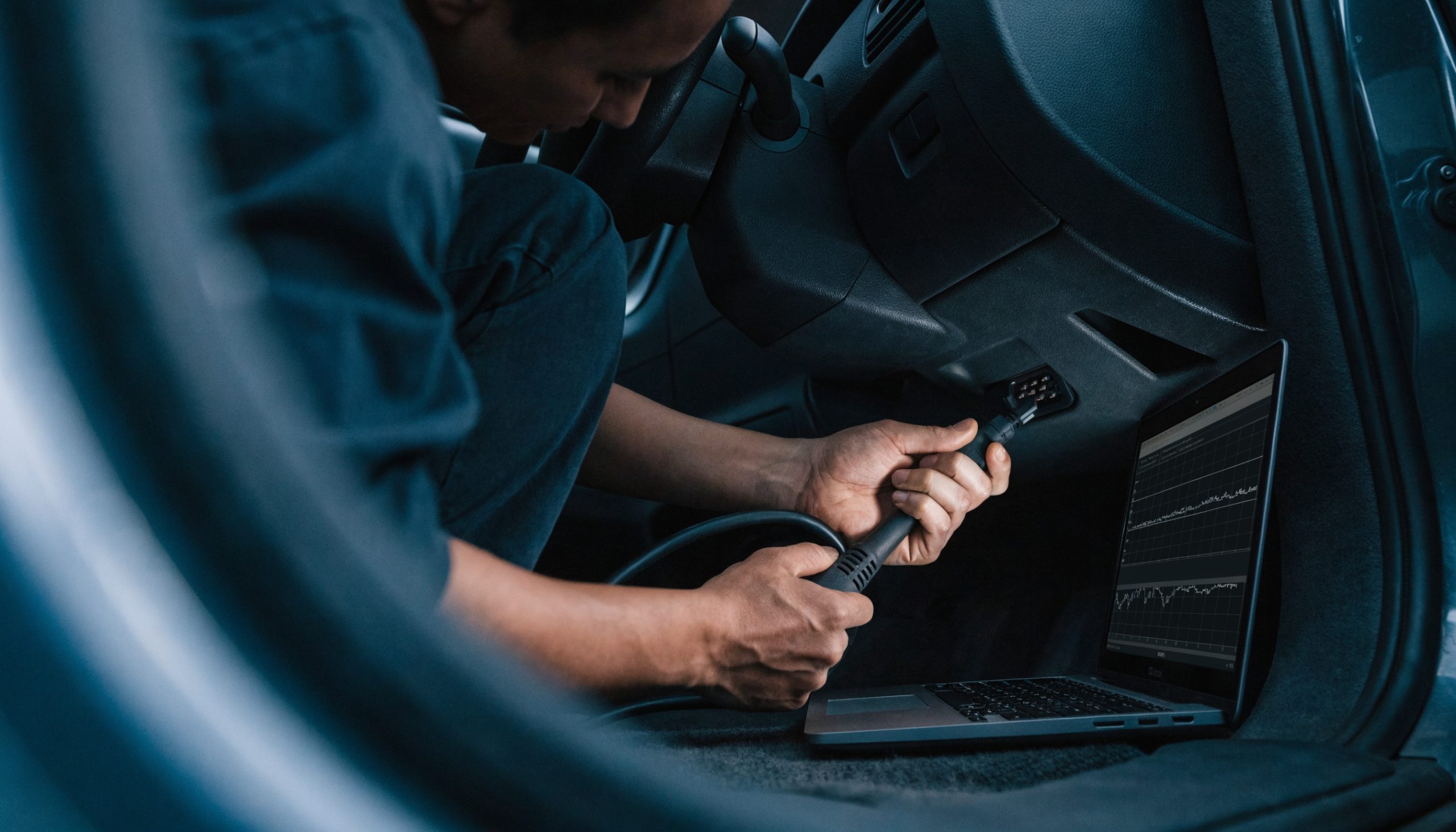
In more serious accidents, where the circumstances in which the accident occurred are disputed or there is disagreement about how the collision came about, an expert report and reconstruction of the traffic accident is prepared, with an analysis of traces, photographs and data taken from the vehicle itself.
If you need advice about a specific case, get in touch with us.
Frequently asked questions
Does the European accident statement have to be filled in at the scene?
It is preferable, because that is when the facts and the sketch are easiest to agree on. If the vehicles are obstructing traffic, first photograph their position and the traces from several angles, and only then move the vehicles and fill in the statement.
Does signing the statement mean that I am admitting fault?
No. By signing you confirm that the details entered about the vehicles, the drivers and the circumstances are correct, not that you are liable for the accident. Liability is established afterwards, on the basis of all the evidence. If you disagree with something, use the remarks section and do not sign content you dispute.
What if the other party refuses to fill in the statement?
Call the police and wait for them to examine the scene. In the meantime note the number plates, photograph the position of the vehicles, the damage and the wider scene, and write down the details of any witnesses.
When does it make sense to engage an expert?
When the parties disagree about how the event unfolded, when the damage does not match the collision as described, or when the amount of damage is significant. In that case an analysis of damage compatibility and a reconstruction of the accident are carried out, using data taken from the vehicle.